At a Glance
- Topics
- Start with what interests your child; Describe needs without labeling your child; Look for a predictable beginning
- Program Details
- Follow the official links on each listing for ages, session dates, fees and registration.
- Guide Updated
01
Start with what interests your child
A quieter child still has preferences, ideas, and things they are eager to learn. Begin there. Ask what sounds interesting and what they would like to make, practice, or understand. An activity they care about gives them a reason to return even when the first visit feels unfamiliar.
Do not assume every shy child wants a quiet table activity, or that a group performance class is automatically wrong. Art classes may appeal to one child, while another prefers movement or storytelling. The teacher's approach and the particular group matter as much as the activity label.
02
Describe needs without labeling your child
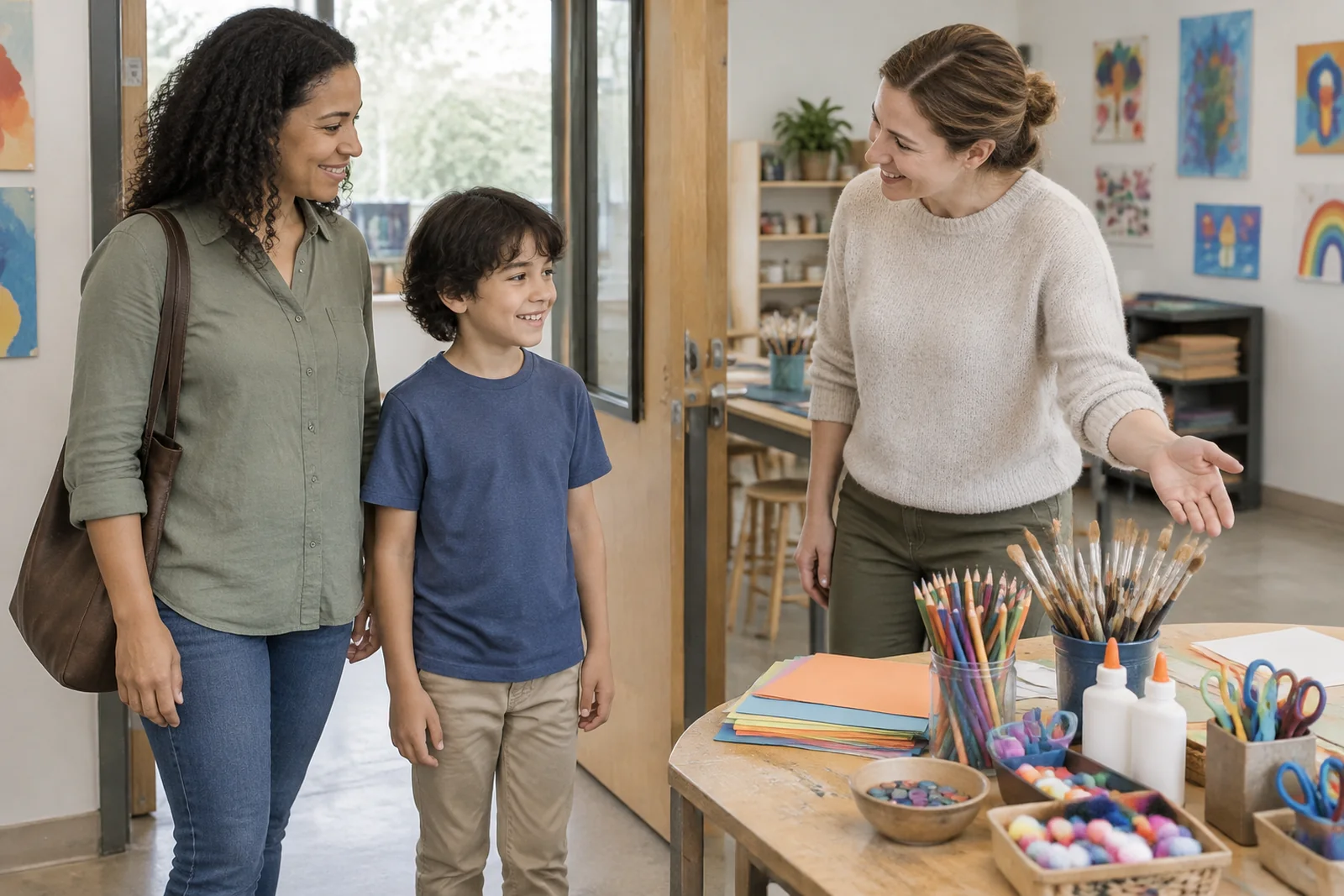
When speaking with a teacher, share useful details rather than introducing your child as the shy one. You might explain that they watch before joining, speak softly in unfamiliar places, or find a noisy arrival difficult. Those observations give the teacher something practical to work with.
Ask what the instructor usually does when a newcomer hangs back. Listen for a clear, respectful response rather than a promise to bring your child out of their shell. Your child does not need a different personality. They need a setting where they can learn and participate without being rushed.
03
Look for a predictable beginning
Arriving can be the hardest part of a new class. Ask where children put their belongings, how the lesson starts, and whether someone greets newcomers. A clear first task can make entering the room easier than being told to mingle while everyone else seems to know what to do.
For preschool classes, ask how staff handle separation and whether a caregiver can help with the initial transition. Policies vary, so confirm before the visit. Whatever the arrangement, tell your child honestly where you will wait and when you will be back.
04
Ask how participation can grow
Gradual participation should still offer a path into the activity. A child might first watch a demonstration, then try beside the teacher, and later join a partner. Ask whether the instructor can offer manageable steps like these without making a public announcement about your child's hesitation.
In chess classes, for example, find out how beginners learn the rules and how partners are chosen. A quieter room alone does not guarantee comfort. A patient explanation and a thoughtful pairing may matter more than the general reputation of the activity.

05
Make the first visit manageable
Tell your child the basics beforehand: where you are going, who will teach, and what the first few minutes might involve. If you do not know something, say you will ask together. Avoid rehearsing every possible problem, which can make an ordinary visit feel like a major test.
Arrive with enough time to find the room without rushing, but not so early that waiting becomes another challenge. Agree on a small goal, such as meeting the teacher or trying one task. Afterward, notice the effort without turning participation into a performance your child must repeat for praise.
06
Notice comfort, not just conversation
A successful class does not have to produce lots of talking. Look for signs that your child is becoming more comfortable: entering with less hesitation, following the routine, asking for help, or mentioning something they want to do next time. Quiet participation is still participation.
If your child is interested in theater and acting, ask how group exercises and individual turns are introduced. Do not enroll solely to fix shyness. A class should offer something your child wants to learn, with support for the parts that feel difficult.
07
Know when to adjust the plan
Some children need repeated contact with the same teacher and group before they settle. That does not mean you must continue regardless of what happens. Check in with your child and the instructor. Ask what is getting easier, what remains difficult, and what adjustment might help.
A different time, group, or activity may be a better match. During New Jersey fall sign-ups, leave space around a new school routine if your child is already handling many unfamiliar people. If distress is strong, persistent, or affecting daily life beyond class, discuss your concerns with your child's pediatrician.
Questions parents ask
Are smaller classes always better for shy children?
Not always. A smaller group can feel easier for some children, while others dislike having attention turn toward them frequently. Ask how the class actually runs, including individual turns and partner work. Teacher responsiveness and a predictable routine can matter as much as group size.
Should my child join with a friend?
A familiar friend may make the first visit easier if both children want the activity. Still, ask how the teacher helps children participate beyond that friendship. Avoid promising they will always be paired together, since attendance and group arrangements can change during a session.
Should I answer questions for my child?
Give your child time to respond before stepping in. If they need help, offer a simple choice or ask whether they would like you to explain something. You can support communication without insisting on an immediate spoken answer or speaking for them throughout the visit.
What if my child only watches?
Ask what they noticed and whether they would like to return. Watching may be a useful first step if the provider allows it and your child is becoming more comfortable. Discuss a manageable next step with the teacher rather than leaving expectations unclear indefinitely.